
Monthly Archives: March 2016

Who Was Saint Patrick?

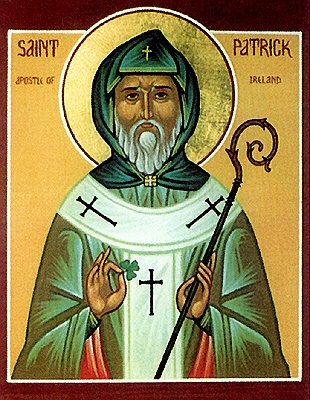
StPatrick1

Today is March 17th, a day people honor a man named Patrick by drinking green beer, dressing like a leprechaun, and eating corned beef and cabbage. Saint Patrick’s day is synonymous with Irish heritage. To celebrate Saint Patrick is now to celebrate the culture of the Irish, but St. Patrick wasn’t even Irish, he was British. Who was the real Saint Patrick and why should modern Christians care? A quick Wikipedia search will tell you Patrick is known for ridding Ireland of snakes and using the shamrock to teach the trinity. These are great accomplishments, but they are not the type of achievements worth celebrating 1,500 years after his life. Let’s look at who he was, why he’s worth remembering, and how incredibly shallow it is to celebrate his life with green beer.

Slave

St. Patrick was born around the year AD 387 with a given name of Maewyn Succat. At the age of 16, he was kidnapped by pirates, taken from his home in Britain and sold into slavery in Ireland. While in slavery, he learned the language, customs, and culture of the local population, the druids. Druids were a violent pagan people who worshiped nature and reportedly made human sacrifices. Some archeologists are finding evidence of cannibalism. While Patrick was a slave to the druids he converted to Christianity and became known as a fearless evangelist. After six years of slavery, he escaped his captors, hiked two hundred miles to the coast, boarded a ship and made his way back to Britain.


Missionary

After his return to Britain, Patrick enrolled in formal theological education and full-time ministry service. In AD 432, about twenty-five years after his escape from Ireland, he returned, not for revenge, but to serve as a missionary. Patrick used a unique approach to reaching the local pagan society. He trained local helpers and clergy rather than bring in foreigners. He also used local items of pagan worship for Christian worship. For example, he used the clover to describe the Holy Trinity, etc. Maewyn brought peace, hope, and love to a war-oriented pagan civilization. His work was groundbreaking, effective, and most importantly, Christ-centered.

The work of St. Patrick was far from easy or comfortable. He once said, “Daily I expect to be murdered or betrayed or reduced to slavery if the occasion arises. But I fear nothing, because of the promises of heaven.” In fifth-century, Ireland women were essentially sex slaves. Patrick brought change to the social order by teaching women they had a choice in Christ. As God converted these women to Christianity, some became full-time servants of Christ in the face of strong family opposition. Patrick told women they could be “virgins for Christ” by remaining chaste. This newfound control was appealing to many women, but it angered many men who believed Patrick was taking away their prized possession. This is just one example of Patrick’s courageous ministry in the face of danger.


The Lesson from his Life

St. Patrick (Maewyn) entered a violent pagan culture long considered a lost cause to the local church. In just a few decades, his willingness to love, serve, preach, and minister led to a shift in the Irish culture, something the Roman Empire failed to do with military might. A healthy Christ-honoring church sprang from the seeds planted by the former slave. Knowing the culture he was called to serve, St. Patrick refused to allow their violence and idolatry to dissuade him from preaching Christ in their midst. For that, we should both honor his work as a missionary and celebrate his name as a courageous leader in the Christian church.  Modern celebrations of St. Patrick’s Day revolve around Irish alcohol, but as Christians, we should celebrate how God transformed a pagan society by using a former slave.

Music Selection for Worship

By Pastor Alex Davies

strum

Music is something that has always inspired me. From the hymns to the heart-lifting joy expressed in “This is Amazing Grace,” God uses my expression of worship to teach me of His greatness. I look forward to singing the classics as well as teaching new songs so that the faithful that walks into Heights Baptist will lift up Jesus with many voices made one. Worship is a response to God. We can’t know God’s worth or declare it unless God reveals himself to us. God initiates worship by revealing himself to us. Then we respond, and the proper response is worship. The more we grasp his greatness, his power, his love, his character, and understand his worthiness, the better we can declare his worth – the better we can worship.

Service Flow

There is a lot of music out there. Many people have written songs and placed music to Scripture since Scripture was given to us. When choosing music for the church to sing for our Sunday morning services, I run each new possible song through a gauntlet of criteria to make sure that the song will fit well within the context of the worship service. Songs are chosen that represent Scripture accurately and are in line with the church’s beliefs. Songs that are hard to sing or have a difficult rhythm are either changed to make for better congregational singing or thrown out. A song must be in a key that most people are able to sing along to. If you’ve heard a song on the radio we are probably going to sing it lower because we can’t all hit that high note. Lyrics that don’t make sense are not used. If a song has a chorus that repeats the same three words forever, we may add more words to give the song more depth.

Flow

In the Old Testament, worship was specific and had a set flow that happened in a specific way. Today, we have the ability to connect and worship God in a far more personal way, but the general flow set out by God in the temple can help us engage our hearts to focus on God with greater conviction.


The Temple

When the Israelites wandered in the desert they carried with them the tabernacle and when the temple was built it followed the same floor plan. It consisted of the gates, the outer courts, the Holy place and the Holy of Holies. Our worship service is designed to flow as if we are walking into the temple to meet with God. We start the worship service with joyous music that proclaims Gods greatness. We then move to the outer courts as if we are walking into our church. This is the fellowship time when we agree and confirm our faith together. The song lyrics we sing will tell about how God is working in our lives. The service continues into the inner courts where the mood of the music gets more serious. The most theological content will be present in these lyrics. Once we move into the “Holy of Holies,” this music is the most intimate. This is where the sermon generally takes place. After this, we walk back out of the “temple” with a song of rejoicing.


This template is just a basic layout of how we can enter into communion together with our God.  It is good and important to remember that while we have choices in how we worship God, the reason we are singing is the most important part of our worship. 1 Samuel 15:22 states, “Is it better to give sacrifices or to know God’s will?” Isaiah 29:13 says, “Your lips sing me praise but your heart is far from me.” Walking through the motions is not going to work. God wants your heart, not your lips.

When presented with a love and joy that comes from God, it is not hard for people to agree on what we would like to say. It can be a real challenge when figuring out how people want to say it. We live in a culture of choice. We get to choose everything. If we don’t like the choices presented to us we just go to another store and get what we want there. If the show on TV isn’t what we want, we’ll pull up Netflix. God has given us many options in how we worship, but if we choose Him, there is only one acceptable way to do it. In Mathew 22:37, Jesus tells us to love God with everything – all of our heart, mind, and soul. Everything. Once you’ve chosen God, nothing else matters. Those worshipping in the temple did not have the option of changing style. There was a set way to do things and if you thought that another way was better, too bad. Because we can choose how to worship, we get mixed up and think that we can’t worship if it’s not the way we like it. When you love God and have seen his glory you can worship with anything. I once climbed a 14er in Colorado. This mountain had an elevation of over 14,000 feet. When I got to the top, the view of God’s creation was so amazing and majestic I felt like breathing hard was worship. I should point out that I really dislike running because of how your lungs feel when you are heavily breathing in cold air.  But on this mountain, my inability to breathe normally was a testament to God’s glory. Breathing in the cold burning air is not very pleasant, but on that mountain, I loved it because it felt like worship. My only reaction to God’s greatness was to breathe. It is all about where your heart is.