
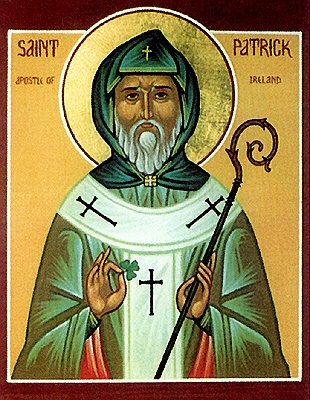
Today is March 17th, a day people honor a man named Patrick by drinking green beer, dressing like a leprechaun, and eating corned beef and cabbage. Saint Patrick’s day is synonymous with Irish heritage. To celebrate Saint Patrick is now to celebrate the culture of the Irish, but St. Patrick wasn’t even Irish, he was British. Who was the real Saint Patrick and why should modern Christians care? A quick Wikipedia search will tell you Patrick is known for ridding Ireland of snakes and using the shamrock to teach the trinity. These are great accomplishments, but they are not the type of achievements worth celebrating 1,500 years after his life. Let’s look at who he was, why he’s worth remembering, and how incredibly shallow it is to celebrate his life with green beer.
Slave
St. Patrick was born around the year AD 387 with a given name of Maewyn Succat. At the age of 16, he was kidnapped by pirates, taken from his home in Britain and sold into slavery in Ireland. While in slavery, he learned the language, customs, and culture of the local population, the druids. Druids were a violent pagan people who worshiped nature and reportedly made human sacrifices. Some archeologists are finding evidence of cannibalism. While Patrick was a slave to the druids he converted to Christianity and became known as a fearless evangelist. After six years of slavery, he escaped his captors, hiked two hundred miles to the coast, boarded a ship and made his way back to Britain.
Missionary
After his return to Britain, Patrick enrolled in formal theological education and full-time ministry service. In AD 432, about twenty-five years after his escape from Ireland, he returned, not for revenge, but to serve as a missionary. Patrick used a unique approach to reaching the local pagan society. He trained local helpers and clergy rather than bring in foreigners. He also used local items of pagan worship for Christian worship. For example, he used the clover to describe the Holy Trinity, etc. Maewyn brought peace, hope, and love to a war-oriented pagan civilization. His work was groundbreaking, effective, and most importantly, Christ-centered.
The work of St. Patrick was far from easy or comfortable. He once said, “Daily I expect to be murdered or betrayed or reduced to slavery if the occasion arises. But I fear nothing, because of the promises of heaven.” In fifth-century, Ireland women were essentially sex slaves. Patrick brought change to the social order by teaching women they had a choice in Christ. As God converted these women to Christianity, some became full-time servants of Christ in the face of strong family opposition. Patrick told women they could be “virgins for Christ” by remaining chaste. This newfound control was appealing to many women, but it angered many men who believed Patrick was taking away their prized possession. This is just one example of Patrick’s courageous ministry in the face of danger.
The Lesson from his Life
St. Patrick (Maewyn) entered a violent pagan culture long considered a lost cause to the local church. In just a few decades, his willingness to love, serve, preach, and minister led to a shift in the Irish culture, something the Roman Empire failed to do with military might. A healthy Christ-honoring church sprang from the seeds planted by the former slave. Knowing the culture he was called to serve, St. Patrick refused to allow their violence and idolatry to dissuade him from preaching Christ in their midst. For that, we should both honor his work as a missionary and celebrate his name as a courageous leader in the Christian church. Modern celebrations of St. Patrick’s Day revolve around Irish alcohol, but as Christians, we should celebrate how God transformed a pagan society by using a former slave.
 joedillabaugh.com