

Category Archives: Uncategorized

Disciples are the Focus

photo-1456685767951-0a8d8610d207

Someone once said that the church is the only organization that exists for people who are not members. This is true. We exist not for ourselves, but for our Lord, and to bring people to Him. There are two disturbing trends in American Christianity. First, there is a real desire to be culturally relevant to the point of ignoring Biblical truth. Second, there is a desire to “circle the wagons” and make the church about ourselves, ignoring the lost of our community. Both are equally damaging and both accuse the other of being a bad church. To be honest, Christianity isn’t about being culturally relevant, but it isn’t about us either. The church was born to make disciples throughout the world. If that is not happening then a problem exists.

It takes intentional obedience to God’s word in order to be the church Jesus birthed. We cannot be satisfied with “doing” church, making fans, or performing. The church must intentionally pursue the gospel. We must see ourselves as the tool God is using to bring the lost to him. We must be reminded that even the most dislikable of people are loved by Jesus. We cannot allow ourselves to put worship on cruise control, because that is certain to end in disaster.


If we fail to be the church, we will only do church. We’re good at Sunday mornings. When we only see one another for two hours once a week it’s easy to smile, engage in small talk, and move on. The church isn’t about Sunday mornings; it’s about making disciples and the best time for that comes Monday-Saturday. Sunday morning is wonderful and corporate worship is essential, but it isn’t the end of worship.  We are the bride of Christ, and brides have a 24/7 commitment.


If we fail to make disciples, we only make fans. Jesus is incredible and the church is beautiful, but evangelism isn’t about relevance. It’s about truth. We want to share who Jesus is and what he has done. Once a person recognizes this (by God’s grace and the Holy Spirit’s work) they will obey. I hear all the time that the Holy Spirit saves, as though this is an acceptable excuse to sit on the sidelines and wait. One of the incredible blessings of God is that he uses us to work out his plan. He includes us in bringing people to faith and uses our testimonies as illustrations to demonstrate grace, mercy, and forgiveness. Making disciples is more than wearing a Tim Tebow jersey, praying in public, or inviting people to church. Making disciples is teaching the Lordship of Jesus and demonstrating obedience to him.


If we fail to be authentic, we are only performers. Christians can present themselves as though they have no problems. This is a lie. Christians struggle, sin, disappoint, fail, and need grace. But Sunday morning comes and they put on a smile as though they aren’t hurting. This isn’t authentic. I can be Christian and hurt. Being authentic takes effort, and if we aren’t, nobody grows or heals.


If we fail to be generous, we will consume everything. A major complaint people make is that people come into a church with a consumer mindset. Some people come with “what can you do for me?” before they say “how can I contribute?”  Giving time, effort, experience, abilities, and finances out of generosity is a God-glorifying blessing. Taking anything available and asking for more is selfish. By default, we spend it all, and we tend to spend pretty much all of our resources on ourselves. Churches tend to fall into the trap of sustaining themselves through programs, maintaining their buildings and budgets, and begging for more volunteers and bigger offerings to keep the snowball rolling. Generosity requires purposeful sacrifice which God transforms into a beautiful blessing.


Our church is in jeopardy of existing for us rather than for them. We’re in jeopardy of loving the institution of the church more than the people of the church. And we’re always in jeopardy of becoming a well-liked brand rather than pointing the culture to Jesus Christ.


So what should we do? With prayer, focus, intention, and effort, we need to:


Check our hearts and our motives.

Remember the mission often.

Keep Jesus at the center.

Love people more than the organization.

Do it all  as though it really matters.
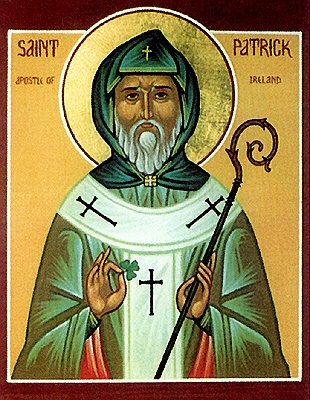
Who Was Saint Patrick?

StPatrick1

Today is March 17th, a day people honor a man named Patrick by drinking green beer, dressing like a leprechaun, and eating corned beef and cabbage. Saint Patrick’s day is synonymous with Irish heritage. To celebrate Saint Patrick is now to celebrate the culture of the Irish, but St. Patrick wasn’t even Irish, he was British. Who was the real Saint Patrick and why should modern Christians care? A quick Wikipedia search will tell you Patrick is known for ridding Ireland of snakes and using the shamrock to teach the trinity. These are great accomplishments, but they are not the type of achievements worth celebrating 1,500 years after his life. Let’s look at who he was, why he’s worth remembering, and how incredibly shallow it is to celebrate his life with green beer.

Slave

St. Patrick was born around the year AD 387 with a given name of Maewyn Succat. At the age of 16, he was kidnapped by pirates, taken from his home in Britain and sold into slavery in Ireland. While in slavery, he learned the language, customs, and culture of the local population, the druids. Druids were a violent pagan people who worshiped nature and reportedly made human sacrifices. Some archeologists are finding evidence of cannibalism. While Patrick was a slave to the druids he converted to Christianity and became known as a fearless evangelist. After six years of slavery, he escaped his captors, hiked two hundred miles to the coast, boarded a ship and made his way back to Britain.


Missionary

After his return to Britain, Patrick enrolled in formal theological education and full-time ministry service. In AD 432, about twenty-five years after his escape from Ireland, he returned, not for revenge, but to serve as a missionary. Patrick used a unique approach to reaching the local pagan society. He trained local helpers and clergy rather than bring in foreigners. He also used local items of pagan worship for Christian worship. For example, he used the clover to describe the Holy Trinity, etc. Maewyn brought peace, hope, and love to a war-oriented pagan civilization. His work was groundbreaking, effective, and most importantly, Christ-centered.

The work of St. Patrick was far from easy or comfortable. He once said, “Daily I expect to be murdered or betrayed or reduced to slavery if the occasion arises. But I fear nothing, because of the promises of heaven.” In fifth-century, Ireland women were essentially sex slaves. Patrick brought change to the social order by teaching women they had a choice in Christ. As God converted these women to Christianity, some became full-time servants of Christ in the face of strong family opposition. Patrick told women they could be “virgins for Christ” by remaining chaste. This newfound control was appealing to many women, but it angered many men who believed Patrick was taking away their prized possession. This is just one example of Patrick’s courageous ministry in the face of danger.


The Lesson from his Life

St. Patrick (Maewyn) entered a violent pagan culture long considered a lost cause to the local church. In just a few decades, his willingness to love, serve, preach, and minister led to a shift in the Irish culture, something the Roman Empire failed to do with military might. A healthy Christ-honoring church sprang from the seeds planted by the former slave. Knowing the culture he was called to serve, St. Patrick refused to allow their violence and idolatry to dissuade him from preaching Christ in their midst. For that, we should both honor his work as a missionary and celebrate his name as a courageous leader in the Christian church.  Modern celebrations of St. Patrick’s Day revolve around Irish alcohol, but as Christians, we should celebrate how God transformed a pagan society by using a former slave.

Music Selection for Worship

By Pastor Alex Davies

strum

Music is something that has always inspired me. From the hymns to the heart-lifting joy expressed in “This is Amazing Grace,” God uses my expression of worship to teach me of His greatness. I look forward to singing the classics as well as teaching new songs so that the faithful that walks into Heights Baptist will lift up Jesus with many voices made one. Worship is a response to God. We can’t know God’s worth or declare it unless God reveals himself to us. God initiates worship by revealing himself to us. Then we respond, and the proper response is worship. The more we grasp his greatness, his power, his love, his character, and understand his worthiness, the better we can declare his worth – the better we can worship.

Service Flow

There is a lot of music out there. Many people have written songs and placed music to Scripture since Scripture was given to us. When choosing music for the church to sing for our Sunday morning services, I run each new possible song through a gauntlet of criteria to make sure that the song will fit well within the context of the worship service. Songs are chosen that represent Scripture accurately and are in line with the church’s beliefs. Songs that are hard to sing or have a difficult rhythm are either changed to make for better congregational singing or thrown out. A song must be in a key that most people are able to sing along to. If you’ve heard a song on the radio we are probably going to sing it lower because we can’t all hit that high note. Lyrics that don’t make sense are not used. If a song has a chorus that repeats the same three words forever, we may add more words to give the song more depth.

Flow

In the Old Testament, worship was specific and had a set flow that happened in a specific way. Today, we have the ability to connect and worship God in a far more personal way, but the general flow set out by God in the temple can help us engage our hearts to focus on God with greater conviction.


The Temple

When the Israelites wandered in the desert they carried with them the tabernacle and when the temple was built it followed the same floor plan. It consisted of the gates, the outer courts, the Holy place and the Holy of Holies. Our worship service is designed to flow as if we are walking into the temple to meet with God. We start the worship service with joyous music that proclaims Gods greatness. We then move to the outer courts as if we are walking into our church. This is the fellowship time when we agree and confirm our faith together. The song lyrics we sing will tell about how God is working in our lives. The service continues into the inner courts where the mood of the music gets more serious. The most theological content will be present in these lyrics. Once we move into the “Holy of Holies,” this music is the most intimate. This is where the sermon generally takes place. After this, we walk back out of the “temple” with a song of rejoicing.


This template is just a basic layout of how we can enter into communion together with our God.  It is good and important to remember that while we have choices in how we worship God, the reason we are singing is the most important part of our worship. 1 Samuel 15:22 states, “Is it better to give sacrifices or to know God’s will?” Isaiah 29:13 says, “Your lips sing me praise but your heart is far from me.” Walking through the motions is not going to work. God wants your heart, not your lips.

When presented with a love and joy that comes from God, it is not hard for people to agree on what we would like to say. It can be a real challenge when figuring out how people want to say it. We live in a culture of choice. We get to choose everything. If we don’t like the choices presented to us we just go to another store and get what we want there. If the show on TV isn’t what we want, we’ll pull up Netflix. God has given us many options in how we worship, but if we choose Him, there is only one acceptable way to do it. In Mathew 22:37, Jesus tells us to love God with everything – all of our heart, mind, and soul. Everything. Once you’ve chosen God, nothing else matters. Those worshipping in the temple did not have the option of changing style. There was a set way to do things and if you thought that another way was better, too bad. Because we can choose how to worship, we get mixed up and think that we can’t worship if it’s not the way we like it. When you love God and have seen his glory you can worship with anything. I once climbed a 14er in Colorado. This mountain had an elevation of over 14,000 feet. When I got to the top, the view of God’s creation was so amazing and majestic I felt like breathing hard was worship. I should point out that I really dislike running because of how your lungs feel when you are heavily breathing in cold air.  But on this mountain, my inability to breathe normally was a testament to God’s glory. Breathing in the cold burning air is not very pleasant, but on that mountain, I loved it because it felt like worship. My only reaction to God’s greatness was to breathe. It is all about where your heart is.


Jesus Friend of Sinners

lightstock_253198_xsmall_joe_dillabaugh

Scripture is clear that Jesus demands worship and complete devotion from his followers, even calling his followers slaves (1 Corinthians 7:22-23). Yet the book of Matthew portrays an incredible picture of Jesus connecting with sinners in a personal way that would make modern Christians cringe. Jesus hated sin yet devoted himself to sinners. Instead of aligning himself with the religious elite he devoted his life to bringing empathy, love, and grace to people long abandoned by the religious leaders of the day. One of the best examples of this comes from Matthew 9:9-13. Jesus calls Matthew the tax collector (the author of the book, also called Levi). Tax collectors were particularly hated by Jews, like a government sanctioned mob boss. Known for their greed and disloyalty, only the most wretched sinners would associate with them (Dr. John MacArthur does a fantastic job of describing tax collectors in his book “The Gospel According to Jesus”).  After his conversion, Matthew holds a banquet inviting Jesus to dine with prostitutes, tax collectors, and other rejects of society.


The Healthy Don’t Need a Doctor

If Jesus demands complete worship from his followers and hates sin, why would he attend a banquet with some of the most notorious sinners in that community? Why would a holy God share a table with prostitutes? That is exactly what the Pharisees wondered, but Jesus himself answers this question saying “those who are well have no need of a physician, but those who are sick.” Jesus was rebuking the Pharisees by presenting the question “if you recognize them as sinners, what are you going to do about it?” Jesus is attacking an attribute of the Pharisees that is also common in modern Christians: labeling people as sinners but remaining numb to their condition. So the lesson from our Lord is this: When you notice a sinner, bring them to repentance as a doctor brings healing to the afflicted.


Go Learn

After he demonstrates their callousness Jesus exploits the pride of the Pharisees. “Go and learn” (vs.13) was a way for teachers to expose ignorance in an area their students should have known. Basically Jesus was saying “go back and study this topic, come back when you understand.” He then quotes Hosea 6:6 saying, “I desire mercy and not sacrifice,” reminding his audience that God is not concerned about religious activity. He wants character. Pharisees had nearly perfected the religious rituals but ignored mercy, compassion, grace, and had no love for the lost. The Old Testament sacrificial system was pleasing to God only when it was accompanied by a broken and contrite heart (Psalms 51:16-17). Sacrifices without repentance are like soiled rags in his presence.


I Did Not Come For the Righteous

Luke 18:9 tells us that Pharisees trusted themselves and looked down on others. In other words, they viewed themselves as righteous. Jesus is saying he doesn’t want the self-righteous. They lack humility, but the sinners he would call to repentance. Jesus is making clear that the gospel is a call for sinners to repent and find forgiveness. The “righteous” simply can’t accept this because they attempt to veil their sinfulness and lack the humility for confession. “I did not come to call the righteous” tells us that Christ’s invitation to salvation is not for those who view themselves as righteous.


Wrap Up

Jesus is calling for repentance, not sacrifice. He wants to see sinners not validate or redefine their transgressions, but turn from them. Sin today is the same as it was 2,000 years ago. Christians should not ignore the “tax-collectors” of today in favor of other Pharisees. The beauty of Christian life is the community. We can minister to the broken in our city together as a unified community. As one body with many parts, our church can impact Billings. We can overcome fear and weakness together. My weaknesses are overcome by the body of Christ as we bring the gospel to our city. In other words, we should follow Jesus’ lead and extend grace and a call for repentance rather than hide in our buildings with like-minded friends pointing fingers at sinners. This may be a radical approach, but Jesus never promised a comfortable life.

What Did Jesus Mean By “Make Disciples”?

lightstock_79933_xsmall_joe_dillabaugh

As Jesus was ascending into heaven he gave his last command: “Go therefore and make disciples of all nations, baptizing them in the name of the Father and of the Son and of the Holy Spirit, teaching them to observe all that I have commanded you. And behold, I am with you always, to the end of the age” (Matt 28:19-20).  Jesus ushered in a new covenant which requires his followers to make disciples. It can be difficult to make disciples if you don’t know what that looks like or how to tell when your task is complete. If Jesus expects us to make disciples, we had better know what he meant by the order.

At Heights, we are bringing a new emphasis to the discipleship process and working to define what this process looks like. When defining what a disciple is, the definition must come from Scripture and it must be simple. One of the best outlines of discipleship comes from one of the most quotable verses in Scripture. Matthew 4:19 states “And he said to them, “Follow me, and I will make you fishers of men.”  This verse shows three aspects of discipleship (as described so well by Jim Putman and Bobby Harrington in their book “Discipleshift”).

  1. Follow Me. 

Jesus is giving an invitation. To be a disciple, one must accept that invitation and one must acknowledge Jesus as Lord and leader. Following him is recognizing who he is while submitting to his leadership and his teaching. Jesus taught this same principle in John 12:26. According to Jesus, a disciple is someone who knows him and follows him. Jesus taught us that those who love him will obey him as well (John 14:23-24). This means that disregarding the Great Commission is an attribute of a “convert,” not a disciple. One who acknowledges Jesus as Lord but does not obey his teaching is self-centered, not Christ-centered.  The first step in being a disciple is cognitively accepting the Lordship and authority of Jesus.

  1. I will Make You.

Jesus is promising transformation. Once we acknowledge his authority, he commits to transform us. All disciples of Jesus have been transformed by him. A person does not transform themselves before discipleship. Transformation is a part of discipleship. This is why we cannot expect unbelievers to behave in ways that glorify God. We live in a secular society, so we should expect to see secular morality. Romans 8:29 and 2 Corinthians 3:17-18 both describe the transformation process and it’s beautiful. Jesus transforms how his disciples see the world. He transforms how they see the lost and he transforms what they value. The apostle Paul is a perfect example of this. Discipleship is not just the acquisition of biblical information; instead, it is the complete transformation of one’s identity by the Spirit of God.

  1. Fishers of Men.

The final part of discipleship refers to action. Our acceptance of Jesus begins in our head, extends to our heart, and is demonstrated with our hands. A disciple of Jesus takes up the mission given by him. This is why Peter stood up and preached at Pentecost. It’s why Peter and John refused to remain quiet and it’s why Paul wasn’t intimidated by persecution. Their hearts had been transformed. They viewed people in a new way and they prioritized Christ’s mission. Because of their transformation, their actions centered around glorifying God by making disciples of Jesus Christ. They were fully devoted disciples of Jesus Christ in their head, heart, and hands. When a person’s heart is transformed they begin to care about the things God cares about. Their heart is broken for the things that break his. Disciples of Jesus care deeply for the lost. 2 Corinthians 5:15-20 describes this well. We are saved not for our glory or purpose, but for his. Our mission isn’t to gather biblical facts or morality score cards, it’s to join God’s mission for his purpose and his glory.

Wrap Up.

Matthew 4:19 isn’t the only verse that describes discipleship and we could write a series of books on the topic, not just one blog post. The point is that discipleship is more than an intellectual acceptance of Jesus’ leadership. It’s more than a heart transformation or good works. The authentic disciple of Jesus Christ combines all of these. The disciple believes, loves, and obeys Jesus Christ as Lord and Savior. The true disciple completely relies on Jesus for everything. When we allow other issues to take the place of discipleship, we become ineffective for our Lord. The moment a program becomes the focus of our faith or moral behavior becomes the end goal, we have lost sight of what Christ last commanded us: make disciples.